National & local holidays
Welcome to the Spanish National & Local Valencian Holidays. Here you learn everything about the vibrant Spanish festive days.

Día de Año Nuevo 1st January
In Spain, New Year’s Eve (Nochevieja) and New Year’s Day (Día de Año Nuevo) are celebrated with great enthusiasm and a mix of traditional customs.
On December 31st, the festivities begin with a vibrant atmosphere across the country. In the evening, New Year’s Eve dinners are a big part of the celebrations, with families and friends gathering to enjoy a late-night meal together. At the stroke of midnight, an iconic Spanish tradition takes place: the eating of twelve grapes (las doce uvas). As the clock chimes twelve times, Spaniards eat one grape for each bell strike, symbolizing good luck for each month of the coming year. It is said that those who manage to eat all twelve grapes will have a year full of happiness and prosperity.
The eating of grapes is often accompanied by fireworks, music, and parties that last until the early morning hours. In larger cities like Madrid, Barcelona, and Valencia, huge crowds gather in the squares to celebrate, especially in Puerta del Sol in Madrid, where a massive crowd gathers to ring in the new year.
January 1st itself is quiet. Streets are calm, many businesses close, and families take the opportunity to gather at home. Traditional meals often include hearty winter dishes like *cocido*, or leftovers from the New Year’s Eve feast. It’s a peaceful, slow day that sets the tone for a reflective start to the year.
Los Reyes Magos 6th January
Three Kings’ Day: Spain’s Most Magical Christmas Tradition
In Spain, the most magical night of Christmas isn’t Christmas Eve—it’s the evening of January 5th, known as Epiphany’s Eve. On this night, children across the country excitedly await a visit from the Three Wise Men (Los Reyes Magos), who travel from the East to leave gifts in homes while everyone sleeps.
The evening begins with the Cavalcade of the Magi (Cabalgata de los Reyes), a vibrant and colorful parade held in nearly every city and village. The Three Kings ride through the streets on elaborately decorated floats, tossing sweets to the crowds and waving to children. It’s a joyful celebration filled with music, lights, and wonder—setting the stage for the long-awaited night.
The real magic happens once children are tucked in bed. According to tradition, the Three Kings visit homes to leave presents, much like Santa Claus does in other cultures. In the morning, on January 6th, families gather to open gifts and celebrate Three Kings’ Day, known in Spanish as El Día de Reyes.
A key part of the celebration is sharing the Roscón de Reyes, a round, sweet bread topped with candied fruit. Hidden inside are small surprises—typically a figurine and a dried bean. The person who finds the figurine is “king” or “queen” for the day, while the one who gets the bean is expected to buy next year’s cake!
Dating back to the 14th century, this tradition continues to be one of the most beloved and festive parts of the Spanish Christmas season—combining magic, family, and ancient customs into one unforgettable celebration.

Fallas de San José 19th of March
The Night of the Cremà: the Fiery Finale of Las Fallas
On March 19th, which is both Saint Joseph’s Day and Father’s Day in Spain, the vibrant Fallas festival in Valencia reaches its dramatic conclusion: the Night of the Cremà. After days filled with music, fireworks, and celebration, all the elaborate Fallas monuments are set ablaze in a breathtaking farewell to the festival.
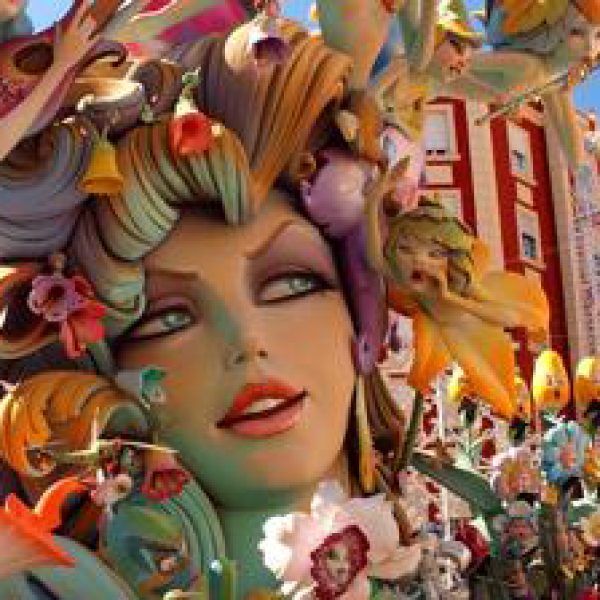
This powerful ritual marks the official end of Las Fallas. The towering sculptures—crafted from wood, papier-mâché, and polystyrene—often depict satirical or symbolic scenes and are built over months by local neighborhood groups known as comisiones falleras.
The honor of igniting each fire falls to the Falleras Mayores, the female representatives of each commission. They light the fuse that starts the flames, transforming the art into ash in a spectacle that stirs both awe and emotion. Fire, in this context, symbolizes renewal, the cleansing of the old to make way for the new.
Though it may seem sorrowful to see such detailed works go up in flames, Valencians embrace the Cremà as a joyful and cathartic moment. It’s a celebration of impermanence, of letting go, and of communal unity. Crowds gather throughout the city to watch as fire consumes the monuments, lighting up the night with both heat and heart.
The Night of the Cremà is more than just a finale—it is the fiery soul of a tradition that brings together art, culture, and community in one unforgettable celebration.
Viernes Santo & Semana Santa
Semana Santa, or Holy Week, is one of Spain’s most solemn and visually striking religious celebrations. It begins on Palm Sunday and concludes on Easter Sunday, commemorating the Passion, Death, and Resurrection of Jesus Christ. In the Marina Alta, towns like Dénia, Javea, Calpe, and Teulada host powerful processions where religious brotherhoods carry lifelike statues of Christ and the Virgin Mary through the streets by candlelight, accompanied by mournful music.
Good Friday is the most emotionally intense day, marked by silence, reflection, and reenactments of the crucifixion. But as the week progresses, the tone shifts. On Easter Sunday, bells ring joyfully and towns burst back to life. Easter Monday, or “Lunes de Pascua,” is typically spent outdoors, with families heading to the countryside for a picnic or a hike. In the Marina Alta, it’s common to enjoy *mona de Pascua*, a sweet bread with a hard-boiled egg, as a treat for children and adults alike.


Fiesta del Trabajo – 1st May
May 1st in Spain: Labor Day and Social Struggle
In Spain, May 1st is an official national holiday known as Día del Trabajador – Labor Day. This day is dedicated to solidarity, workers’ rights, and the remembrance of social struggle. The origins of May 1st lie in the international labor movement and refer to the Haymarket Affair in Chicago in 1886, where workers fought for the eight-hour workday.
During the Franco dictatorship (1939–1975), trade unions were suppressed and public demonstrations on this day were banned. After Spain’s transition to democracy, May 1st regained its full meaning. Today, trade unions like UGT and CCOO organize marches and gatherings across the country, drawing attention to fair wages, safe working conditions, gender equality, and social justice.
While the day has its roots in protest and resistance, for many Spaniards it is also a moment of rest and togetherness. As it is a public holiday, many people choose to spend time with family or friends, enjoy a day out, or simply relax at home. In large cities like Madrid, Barcelona, and Bilbao, there are usually demonstrations, while in smaller towns it often remains a quiet day off.
May 1st in Spain is therefore both a day of action and reflection: a reminder of the hard-won rights of workers, and a call to continue striving for a just society.
San Juan – 24th June
San Juan, or Saint John’s Eve, is one of the most magical nights on the Spanish calendar. Celebrated on June 23rd, the night before the official holiday, it marks the **summer solstice** — the shortest night of the year — with fire, water, and festivity.
Along the coast of the Marina Alta, especially in towns like Dénia, Jávea, and Calpe, people gather on the beaches to light bonfires, play music, and celebrate under the stars. At midnight, tradition calls for jumping over flames and running into the sea to wash away negativity and bring good luck.
There’s dancing, fireworks, and a general sense of liberation and renewal. For many, San Juan is about letting go of the past and embracing what’s to come — surrounded by friends, saltwater, and laughter.


Asunción de la Virgen – 15th August
La Asunción de la Virgen 15th August
The Assumption of Mary is a national holiday in Spain. It celebrates the Assumption of Mary, the mother of Jesus. According to Catholic tradition, she was taken up into heaven body and soul at the end of her life. This was instead of dying. The Assumption of Mary is the oldest Christian holiday still celebrated in Valencia and has been celebrated since 1352!
On August 15, Spain celebrates La Asunción, a national holiday and Catholic high day on which the faithful are expected to attend mass. Although originally a religious festival in honour of Mary’s Assumption, for many Spaniards it now mainly marks the start of the summer holidays.
In 1950, Pope Pius XII officially declared the dogma of the Assumption of Mary, despite the fact that there is no direct biblical account of her death or ascension. Nevertheless, the day is considered very important by the faithful.
Regional celebrations vary greatly: in Madrid, the Virgen de la Paloma is honored, in Barcelona there is the festival of the Barrio de Gràcia, and in Huesca, San Lorenzo is celebrated. In La Alberca, an ancient religious play, La Loa, is performed, and in Elche, the famous Misterio de Elche takes place, a medieval mystery play about the Assumption of Mary that is recognized by UNESCO.
In most villages in the Marina Alta, locals gather for dinners, dancing and fireworks in the streets, which also gives the holiday a strong social character.
Día de la Comunitat Valenciana 9th of October
The Significance of 9th October in Valencia
In Valencia, October 9th is a historically significant day, as it marks the anniversary of James I’s entry into the city in 1238, when he liberated Valencia from Muslim rule. This date is celebrated as the symbolic birth of the Valencian people, representing the beginning of the city’s Christian reconquest and its eventual integration into the Kingdom of Aragon.
On this special day, Valencians honour their heritage and the long-standing cultural traditions that define the region. The typical gift for the occasion is marzipan shaped like fruits (mazapán), which is both a symbol of love and devotion. Marzipan has a deep-rooted place in Valencian culinary culture, and on October 9th, it’s often wrapped in a decorative handkerchief and exchanged between couples as a token of affection.
Bakeries and pastry shops across the city proudly display these beautifully crafted marzipan treats, with a variety of intricate fruit shapes, and locals eagerly purchase them to celebrate the day. Marzipan, made from almonds and sugar, is a beloved sweet enjoyed by everyone in Valencia, and its presence on October 9th makes the holiday feel even more special.
The day is filled with parades, concerts, and other celebrations, but the marzipan remains one of the most cherished parts of the festivities. It is a reminder of the city’s rich cultural history, as well as the enduring traditions that continue to bind the people of Valencia together.


Fiesta Nacional de España 12th October
Spain’s National Day: October 12
October 12 is Spain’s National Day, commemorating the discovery of America by Christopher Columbus in 1492. This event marked a significant turning point in world history, expanding Spain’s global influence. The celebration was made official in 1918 by King Alfonso XIII and is a day to reflect on Spain’s heritage and its worldwide impact.
National Day in Spain is marked by military parades, official ceremonies, and public events throughout the country, including a major celebration in Madrid, where the King and other Spanish officials attend the parade in Plaza de Cibeles. The day symbolizes national unity and pride, with many Spaniards reflecting on their shared history.
In the Valencia region, October 12 is not only a national celebration but also a special day for regional pride. The city of Valencia often hosts vibrant public events, including cultural performances, concerts, and exhibitions, highlighting its rich historical and cultural heritage. Additionally, fireworks displays are a common feature of the celebration, lighting up the night sky as a symbol of the region’s festive spirit.
While October 12 is primarily a celebration of Spain’s national identity, it also serves as a moment for regional pride and reflection, especially in areas like Valencia, where both tradition and modernity intertwine.
Día de Todos los Santos 1st November
All Saints’ Day: November 1st
In many countries with a Christian tradition, November 1st is dedicated to All Saints’ Day, a day to honor saints, both known and unknown. This important day was established by Pope Gregory IV in 835, and it serves as a time to commemorate the lives and deeds of those who have been canonized by the Church, as well as those who, though not officially recognized, performed significant acts of virtue and are believed to be in Paradise.
All Saints’ Day falls between the celebrations of Halloween on October 31st and Day of the Dead on November 2nd, creating a unique period of reflection on life, death, and the afterlife. The day is a solemn occasion, marked by church services, prayers, and rituals, where believers honor the saints who served as role models of faith and virtue.
In many cultures, it’s also a time for people to reflect on their loved ones who have passed away, remembering them with respect and reverence. The connection between All Saints’ Day and Day of the Dead can be seen in the shared themes of remembrance and honoring the deceased, though each holiday has distinct customs and traditions.
All Saints’ Day is a day of unity for Christians around the world, celebrating the legacy of those who lived exemplary lives and are believed to be enjoying eternal life in heaven.


Día de la Constitución Española 6th December
Constitution Day (Día de la Constitución Española) is celebrated on December 6th in Spain, marking the anniversary of the approval of the Spanish Constitution in 1978. This day commemorates the adoption of the current post-Francoist Constitution, which was approved by a large majority in a national referendum.
The 1978 Constitution was a pivotal moment in Spain’s history, as it laid the foundation for the country’s democratic system and marked the end of decades of dictatorship under Francisco Franco. The adoption of the Constitution represented a new era of political freedom, autonomy for regional governments, and the protection of civil rights.
On December 6th, Spain observes a public holiday, with official events and ceremonies honoring the democratic values established by the Constitution. It is a day for reflection on Spain’s progress since the transition to democracy, and for many, it is a symbol of unity and commitment to the country’s democratic principles.
Navidad 25th December
Christmas Day in Spain is a warm and family-oriented holiday, steeped in religious tradition and Mediterranean hospitality. While Nochebuena (Christmas Eve) is when the big meal and family reunions typically happen, December 25th is a quieter, reflective day spent enjoying leftovers, playing board games, or taking a walk by the sea or mountains.
Churches hold Misa del Gallo at midnight on the 24th, a beautiful candle-lit service celebrating the birth of Jesus. In the Marina Alta, the atmosphere is intimate and joyful — with local churches hosting nativity scenes (belenes), carol singing, and charity markets.
Unlike some countries, gift-giving is still more common on January 6th with the arrival of the Three Kings, which means Christmas Day is more about presence than presents. And that’s what makes it so special.